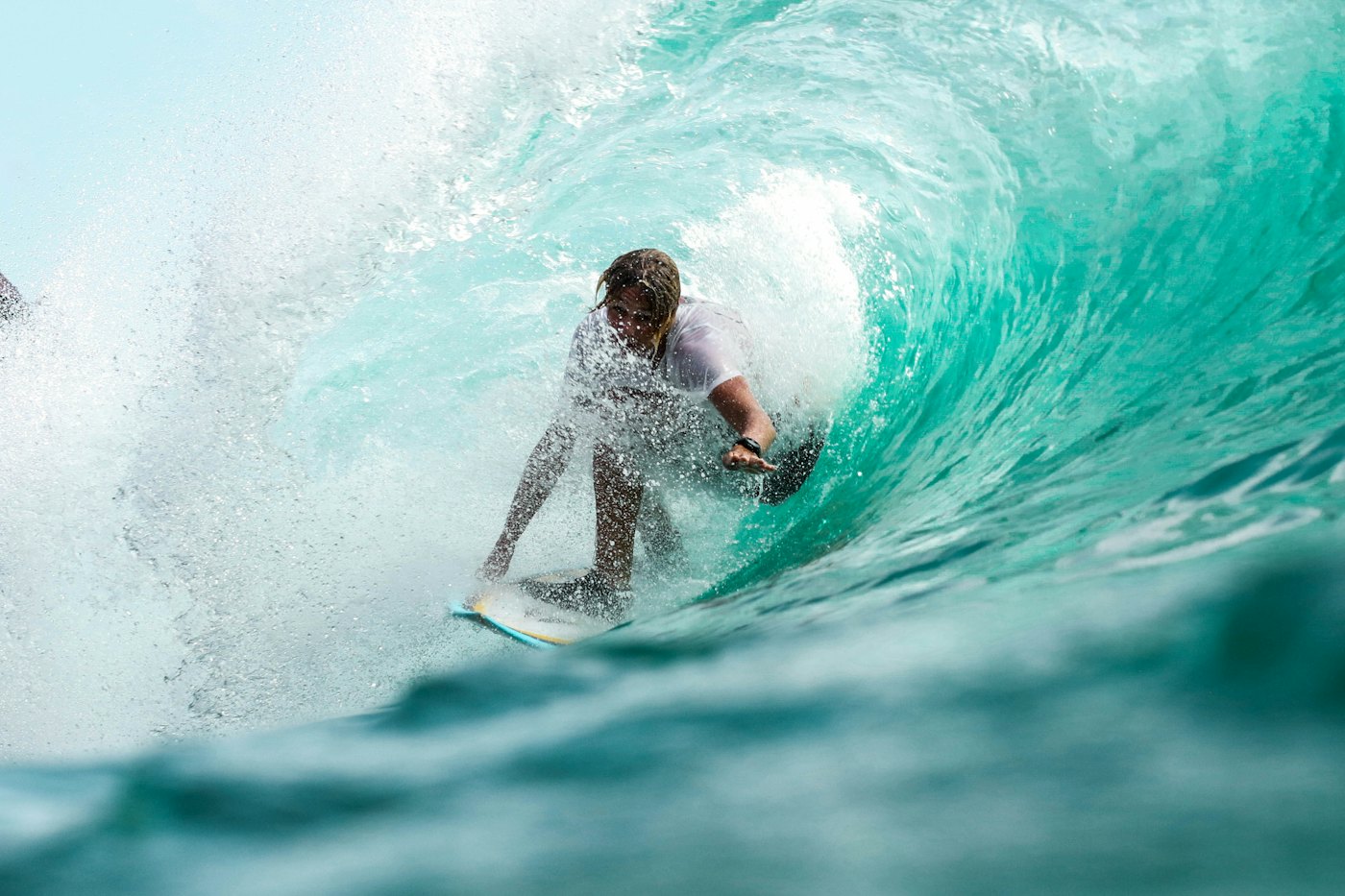

North of Sagres the Algarve changes character. The resorts disappear, the cliffs turn dark and green, and the coast becomes a succession of wild beaches at the end of winding roads, backed by hills of pine, cork oak and eucalyptus. The municipality of Aljezur holds most of it, and for many surfers it is the most beautiful stretch of coast in Portugal.
It is also where some of the most characterful second homes in the country are found: old farmhouses restored on large plots, a few minutes from the sea. This guide covers the waves, the culture and the property first, and ends with protecting a house here — where the defining risk is not the ocean but fire.
Holiday homes: the two policies we place most, Hiscox and Liberty
Most of the holiday homes we insure in Portugal sit with Hiscox or with Liberty Mutual. Both were written for owners who are not there all year, which is exactly where a standard Portuguese policy fails: the unoccupancy clause that suspends cover after 30, 60 or 90 days.
Hiscox Holiday Homes
For a second home in Portugal, issued by Hiscox's Portuguese branch.
- No limit on the days the house can stay empty. The water damage, vandalism and accidental damage exclusions only apply if the house is not furnished for normal use.
- Buildings settled on rebuild cost, with flexibility by agreement up to the sum insured, and no proportional reduction.
- Liability of €7,500,000, an accidental damage extension, and emergency travel to the house and temporary accommodation after a claim.
- Loss of rent cover; lending the house free of charge to family and friends is accepted.
- No deductible on claims above €10,000; earthquake deductible of €7,500 or 2.5% of buildings and contents, whichever is higher.
- Contents insured at the level the house really needs, with no €150,000 minimum.
Watch: Jewellery and watches are not covered, and personal belongings are covered outside the house only in Portugal and for up to 90 days.
Liberty Mutual, through Innovarisk
Home Insurance for owners whose main residence is outside Portugal and who do not let the house regularly.
- All risks, including accidental damage, with the proportional rule waived (except for the compulsory fire cover of a flat in a condominium, where Portugal's standard fire wording still applies).
- Rebuild cost and, if rebuilding is not reasonable, an agreed amount up to the sum insured.
- Liability of €7,500,000, no deductible on claims above €10,000, and alternative accommodation for up to two years.
- Emergency travel to the house (€525 per ticket, €2,250 a year), garden cover including storm, and loss of rent up to €37,500.
- Three-year Long Term Agreement: Liberty renews on the same terms for three years if the first-year loss ratio stays below 50% and premiums are paid. It binds the insurer, not you.
Watch: The house must be furnished for normal living. Paid letting has to be declared, be occasional and rest on a signed rental agreement; short-term tourist letting (Alojamento Local) needs its own liability policy.
What we need to quote a holiday home
- Address, type of property, year of construction and gross area.
- Your country of residence and how many weeks a year the house is used.
- Whether the house is lent or let, to whom and how often.
- Rebuild value (we calculate it with the APS SCRIM simulator) and the contents to insure.
- Alarm, safe, and who checks the house while you are away.
Conditions summarised from each insurer's wording and the proposals we place; the policy issued and its schedule always prevail, and cover is subject to the insurer's acceptance.
The beaches of the Aljezur coast
- Arrifana — a crescent of sand beneath high cliffs, with a small fishing harbour and the Pedra da Agulha sea stack. The bay is sheltered from the northerly wind and works when the open coast is too big; at the northern end a right-hand reef point lines up on the larger swells for experienced surfers. On smaller days it is full of schools.
- Monte Clérigo — a little village of coloured houses around a beach break, good on moderate swells and quieter than Arrifana.
- Amoreira — where the Aljezur river meets the sea, with dunes and shifting river-mouth sandbanks that can produce excellent peaks.
- Odeceixe — at the mouth of the Seixe, on the border with the Alentejo, a beach split between river and sea; smaller, gentler and a favourite with families.
- Amado and Bordeira — at Carrapateira, just south in the municipality of Vila do Bispo. Amado is one of the great surf-school beaches of the Algarve: long, consistent and with peaks for every level.
Swell, wind and seasons
This coast faces due west and catches everything the North Atlantic sends. September to November is the classic season, with groundswell, lighter winds and warm water; spring can be just as good. Winter is big, powerful and sometimes too much for the exposed beaches, which is when sheltered corners like Arrifana come into their own. Summer is smaller and busier: surf early, before the afternoon nortada, and spend the rest of the day on the beach or the river.
A day here tends to be unhurried: a check of two or three beaches, a session, lunch in Aljezur or at a beach restaurant, an afternoon walk on the clifftop Fishermen’s Trail of the Rota Vicentina, sunset over Arrifana.
A slow, green, outdoor culture
Aljezur itself is a small town on a river, with the ruins of a Moorish castle above it and a reputation for its sweet potatoes. The surrounding hills have long attracted people seeking a different pace: long-established communities of Germans, Dutch and British who came decades ago, young families, artists, organic growers, yoga teachers and surf coaches. Surf and yoga retreats are part of the local economy, and the surf scene is relaxed and community-minded rather than competitive.
Compared with Sagres it is more pastoral; compared with Ericeira it has no real town to speak of. What it offers instead is space, landscape and the sense that the coast has been left largely as it was — much of it lies within the natural park.
Montes, villas and village houses
Buyers are Northern Europeans, Lisbon families, Americans and founders and executives who want privacy and land. The characteristic high-value home is a restored monte — a traditional farmhouse, often extended with contemporary architecture — on a plot of several hectares in the valleys and hills, with a pool, outbuildings, stone walls and a view to the sea. There are also architect houses near Arrifana and in the Vale da Telha area, and village houses in Aljezur and Odeceixe.
Much of the coastal strip lies in the Parque Natural do Sudoeste Alentejano e Costa Vicentina, so building and renovation are closely controlled. Many rural properties run on boreholes and septic systems, some on off-grid solar, and are reached by dirt tracks or narrow cliff roads. Lagos is around half an hour away, Faro airport around an hour and a half, Lisbon under three hours. Some owners live here year-round; many come for weeks at a time.
Protecting the house and the family
- Wildfire. The defining risk. The hills behind the coast, and the Serra de Monchique beyond, have burned on a large scale more than once this century — 2003 and 2018 are the years locals name. Fire is part of a standard multi-risk policy, but underwriters look closely at vegetation around the house, access for fire engines, water supply and roofing. Portuguese law requires owners of buildings in rural areas to manage vegetation in a strip around them, generally 50 metres, and a house that ignores it is harder to place.
- Rebuild under park rules. Rebuilding after a fire may have to follow current park and planning rules; the sum insured and the allowances for debris removal, fees and compliance should reflect that.
- Everything outside the house. Outbuildings, walls, pools, boreholes and pumps, solar panels and batteries should all be declared and included; they are often the costliest items to replace after a fire.
- Empty months. Unoccupancy clauses, key-holder or home-watch visits and water shut-off matter on a remote property. See unoccupancy clauses.
- Retreats and letting. A private home policy usually excludes commercial activity. Hosting surf or yoga retreats needs its own liability cover, and short-term letting its own Alojamento Local insurance. See retreat liability.
- Kit and people. Boards and foils in the car, and personal accident wordings with hazardous-sports exclusions, are worth checking for surfing families.
Before the season: a short checklist
- Clear vegetation around the house and outbuildings before summer, and keep a record of it.
- Check that fire engines can reach the house and that water is available on the plot.
- Include outbuildings, walls, pools, boreholes and solar in the sum insured.
- Arrange regular visits while the house is empty.
- Tell your insurer about any letting or retreat, however occasional.
A monte or villa near Aljezur?
Send us the details and we will come back with a written assessment — fire, water, outbuildings, empty months and the way you use the house.
Talk to us
Adler & Rochefort is an ASF-registered insurance intermediary with its head office in Lisbon, advising private clients across Portugal and Spain. For a monte near Aljezur we look at the house, the land, the contents and the people together, and give you our view in writing — one adviser from the first conversation to any claim. The wider picture is in our guide to surfing Portugal and the second homes it attracts.
More from the surf coast: The whole coast · Ericeira · Nazaré · Sagres · Lagos
Adler & Rochefort is a commercial brand of Ownizo, Unipessoal Lda., registered with the ASF under no. 425591790/3. General information from an insurance intermediary, not personalised advice; what a policy covers depends on its wording.